Sheriff Nolan thought five-year-old Leo was just causing trouble in the storm. But when the dam broke and Blackwood Creek flooded before sunrise, everyone finally understood that the boy’s silence had been a warning.
I had been sheriff of Blackwood Creek for twenty years, and I thought I knew the difference between danger and disorder.
Then Leo taught me I did not.
He was five years old, small, silent, and always watching things the rest of us ignored. The cracks in sidewalks. The shaking of telephone wires. The water rising under the old bridge. The dark line of the mountain above town.
People called him difficult.
His mother, Sarah, called him misunderstood.
For seven days, rain beat down on Blackwood Creek until the roads shone like black glass and the creek pushed hard against its banks. County engineers told us Shadow Ridge Dam was still within safety limits.
I believed them.
Leo did not.
Two days before the flood, Mrs. Higgins called 911 because Leo was stealing stones from her yard. When I arrived, he was dragging a rock through the mud toward the drainage ditch. His pajamas were soaked. His face was red with effort.
“Leo,” I said, “put it back.”
He pointed toward the ditch, then toward the mountain.
I barely looked.
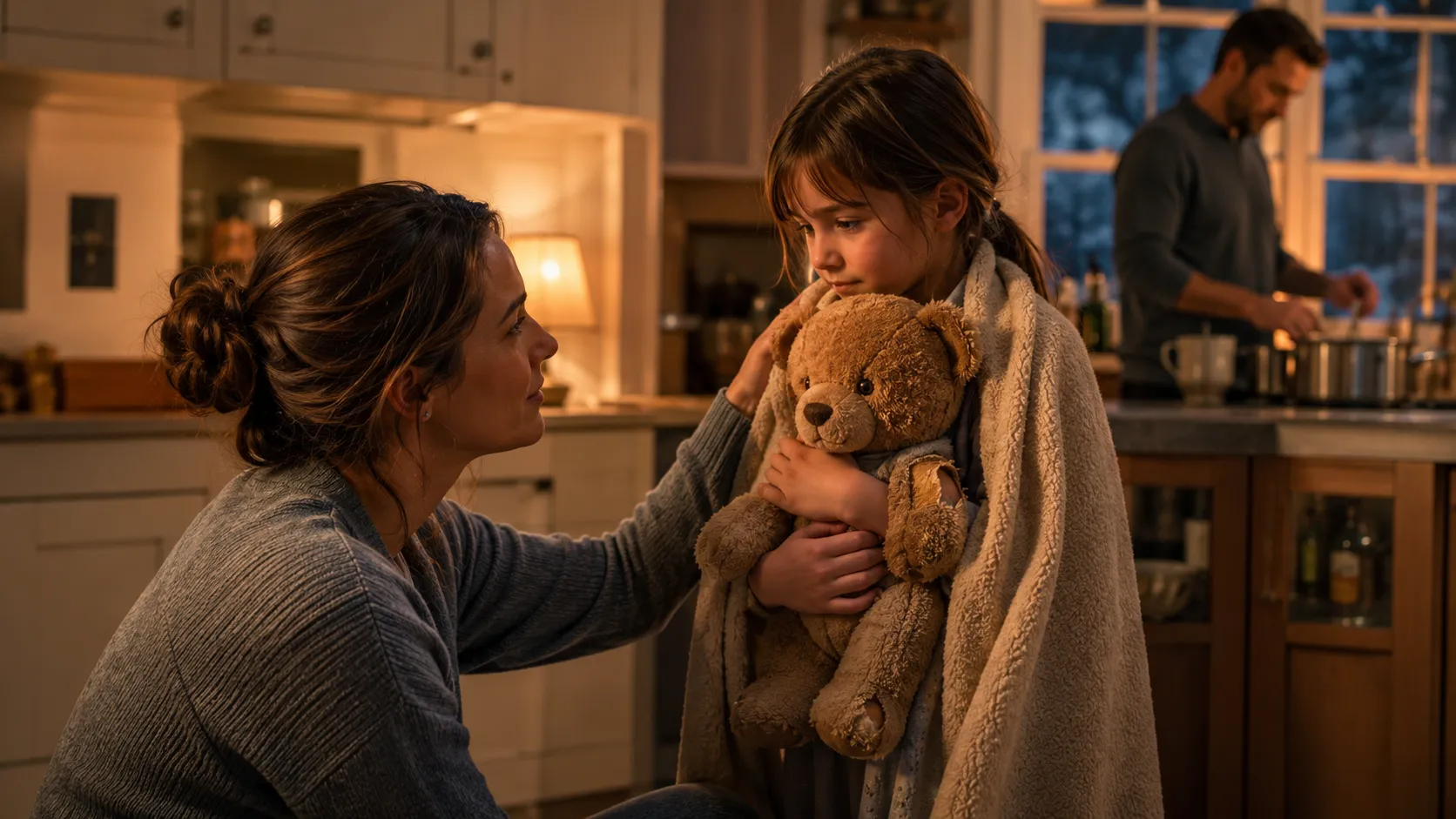
Sarah ran out, exhausted and apologizing. “He’s been obsessed with digging and stacking rocks all week. I’m so sorry, Sheriff.”
I told her to keep him inside.
I remember Leo at the window afterward, one hand pressed against the glass, staring at me as if I had failed a test I did not know I was taking.
The next night, the storm became violent.
At 2:00 a.m., Deputy Miller burst into the station dragging Leo by the collar of his wet pajamas.
“I found him at the siren tower,” Miller shouted. “He had a crowbar. He broke the lock on the manual override box.”
The emergency siren.
If he had triggered it, the whole valley would have panicked.
I was tired, wet, and too sure of myself.
“Enough,” I snapped.
Leo reached for my radio, making a low, desperate sound in his throat. Then he pointed at the floor and moved both hands downward, like something breaking apart.
“The dam is fine,” I said.
I put him in the holding cell until Sarah could get there.
He gripped the bars and opened his mouth in a silent scream.
I turned away.
Twenty minutes later, the radio went dead.
Then the ground shook.
It was not thunder.
It was Shadow Ridge Dam giving way.
By the time the emergency system failed, the first wave was already racing through the valley. Power lines dropped. Roads vanished. The creek became a wall of black water carrying fences, branches, and porch steps through the dark.
We ran door to door.
We shouted until our voices tore.
And in the middle of it all, Leo was still trying to help.
Sarah found the drawings in his room after the first evacuations: crooked maps of the creek, the bridge, the lower streets, and the siren tower. He had drawn red lines where the water would go. He had stacked stones to show weak banks. He had dug channels in the mud to show how the flood would split through town.
He had not been making trouble.
He had been making a warning we were too arrogant to read.
At dawn, Blackwood Creek was broken, but alive.
The lower streets were flooded. The bridge was gone. Homes were damaged. But the first siren Leo tried to trigger had finally been activated by hand, and that warning gave dozens of families enough time to climb to higher ground.
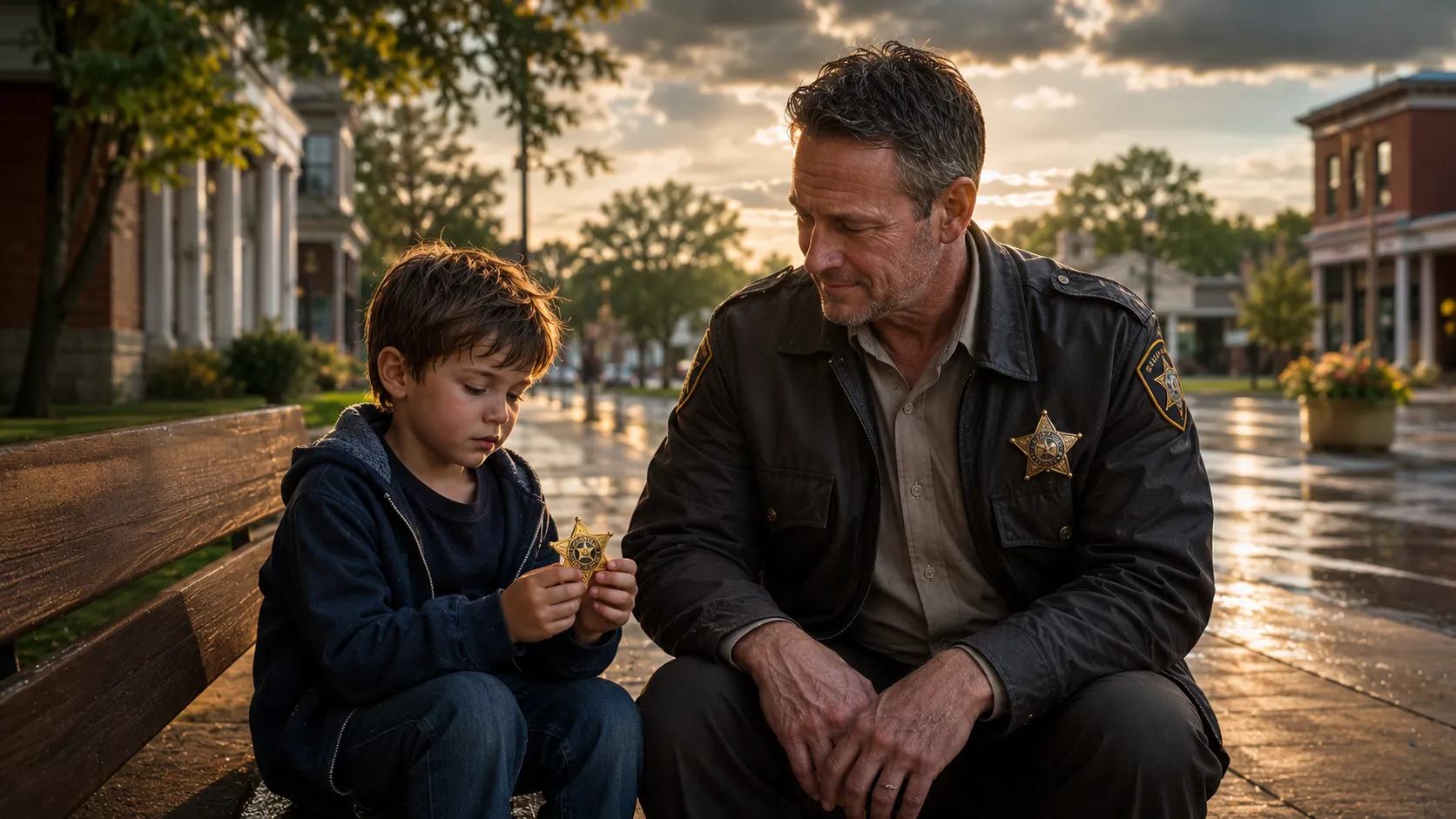
When I found Leo after sunrise, he was sitting on the steps of the school gym, wrapped in a blanket, staring at the ruined town.
I knelt in front of him.
For once, I did not speak first.
I took off my sheriff’s badge and placed it in his small hands.
“You tried to tell us,” I said.
Leo looked at the badge, then at the mountain.
His fingers traced the metal star slowly.
Sarah began to cry.
The town changed after that.
Not overnight. Shame never works that cleanly. But people stopped calling Leo a menace. Engineers studied the places he had pointed to. Teachers learned to watch his drawings. Neighbors stopped laughing when he paused to listen to vibrations no one else felt.
And I changed too.
I no longer trust only the loudest voice in the room.
Sometimes a warning comes without words.
Sometimes a child sees the crack before the wall falls.
And sometimes the person everyone dismisses as difficult is the only one trying to save them.